Infertility Doctor Blog Pacific Fertility Center
Pacific Fertility Center ®
Main Number (415) 834-3000
Resources: 
Fertility, Infertility & IVF
Home
Initial Appointment
(888) 834-3095
 
PGD/Genetic Diagnosis of Embryos

Pacific Fertility Center, located in Northern California’s San Francisco Bay Area, has partnered with California Pacific Medical Center, A Sutter Health Affiliate, to present The Bay Area PGD Program. The brochure below answers common questions related to Preimplantation Genetic Diagnosis.

The Bay Area PGD Program Brochure (PDF)

For some couples, the birth of a child with significant birth defects or a serious medical condition is the first indication that one or both of the parents may carry a genetic mutation that may result in a genetic disorder for their children. Other individuals may know they carry genetic mutations because of other affected family members. Some couples have been tested for common genetic mutations such as cystic fibrosis or sickle cell anemia and are aware prior to conceiving a child that they are at risk of having a child with serious medical problems.

In the past, once the diagnosis of a genetic disease was determined, parents could only be counseled about the risks of having a child with that specific disease. With the development of amniocentesis and chorionic villus sampling (pre-natal genetic testing) and the development of the ability to test the DNA (genes) of the fetus directly, a couple can know fairly early in pregnancy if their child will be affected with the disease. They then face the difficult decision of whether or not to terminate the pregnancy.

The Human Genome Project has greatly expanded our knowledge of the exact molecular basis of many familial diseases. The list of diseases for which the specific mutation(s) has been identified is growing daily.

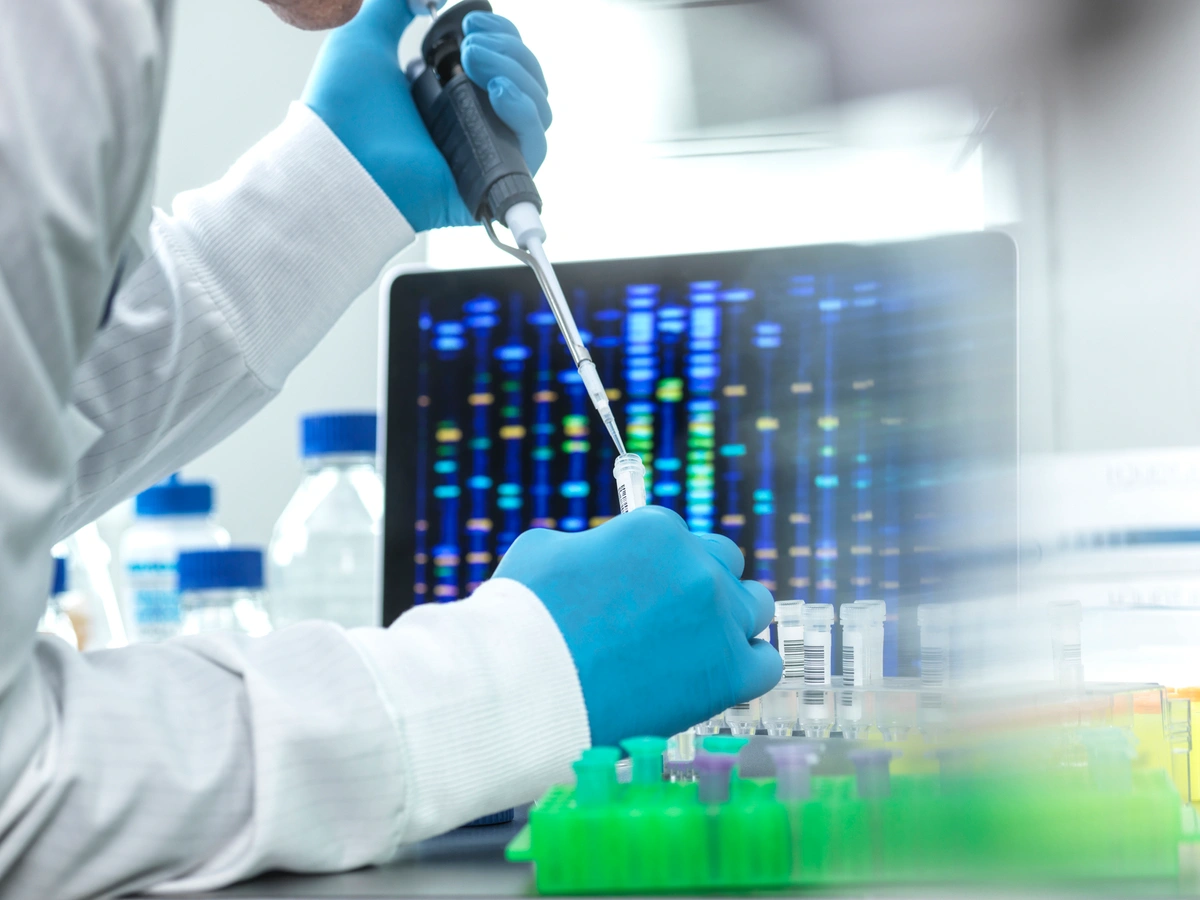
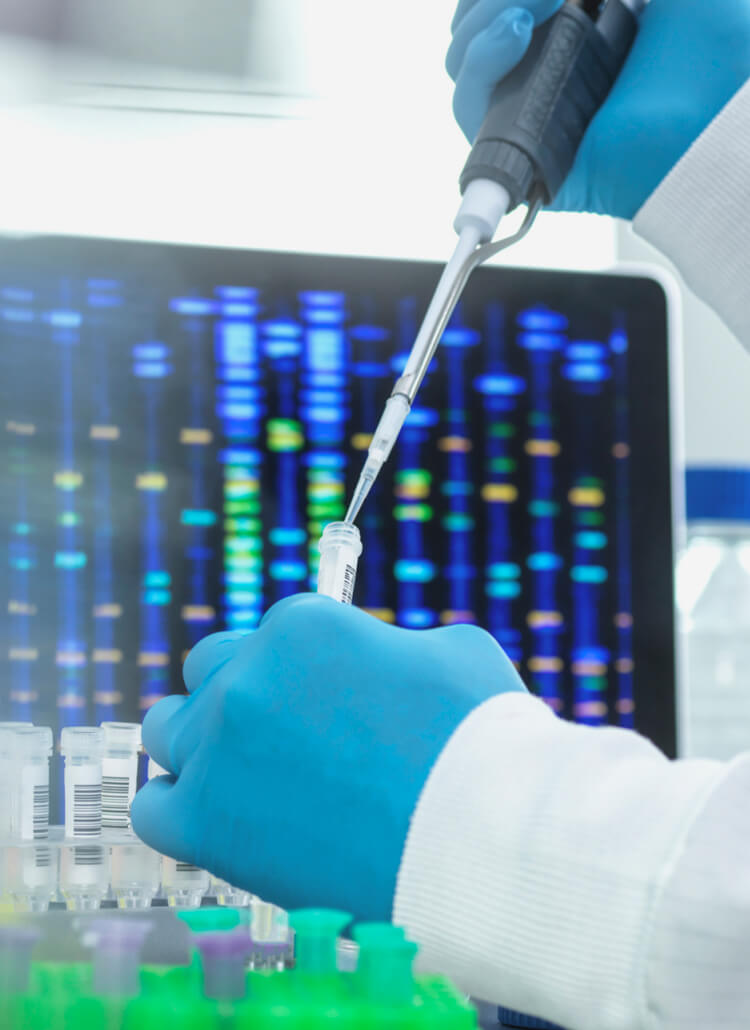
The development of In Vitro Fertilization along with embryo micromanipulation techniques and DNA amplification technology (polymerase chain reaction or PCR) has enabled scientists to diagnose genetic abnormalities in very early human embryos prior to implantation of the embryo in the uterus. This process is called "Pre-Implantation Genetic Diagnosis" or "PGD." In this process, a couple in which one or both partners carry a genetic mutation undergoes In Vitro Fertilization to create several early embryos. A single cell is removed from the embryo once it has achieved an 8-cell stage (two days after fertilization in the laboratory). The nuclear material containing the DNA from this cell is then put through the DNA amplification process to make millions of copies of the gene that may contain the mutation. The amplified DNA is then tested to determine whether or not the embryo from which the DNA was obtained carries the genetic mutation. In this manner, only unaffected embryos will be selected to be transferred back to the uterus of the female partner.

Click here to view laboratory footage of a PGD. In this footage, a small hole is drilled in the shell surrounding the embryo, allowing a cell to be removed for genetic testing.

A list of diseases for which the mode of genetic transmission and the exact mutation have been identified is listed below. If the gene mutation causing the disease in a particular family is identifiable, physicians can administer a personalized test. It is important that the family talks to their own genetic counselor or to a counselor associated with PFC to determine whether informative DNA markers or mutation testing is available for their particular family's genetic disorder.

At Pacific Fertility Center, our Laboratory Director has extensive embryo micromanipulation and biopsy experience. We work with a leading team of molecular biologists who provide specific genetic counseling, evaluation and perform the DNA testing using rigorous standards to virtually eliminate the possibility of a misdiagnosis. Despite the fact that several hundred babies have been born through this method worldwide, it is important that the couple understand this is still considered an experimental procedure and they will need to undergo prenatal genetic testing (amniocentesis or chorionic villus sampling) during pregnancy to ensure that a proper diagnosis has been made.

PGD is available for over 130 different diseases - this is not an exhaustive list.

MENDELIAN DISORDERS FOR WHICH PGD IS OFFERED

Achondroplasia (FGFR3)
ADA (Adenosine Deaminase) deficiency
Adrenal hyperplasia
Adrenoleukodystrophy (ABCD1)
Agammaglobulinemia-Bruton (TyrsKnse)
Alpha Thalassemia (HBA1)
Alpha-Antitrypsin (AAT)
Alport Syndrome (COL4A5)
Alzheimer (very early onset-PSEN1)
Beta Thalassemia (HBB)
Bloom Syndrome (Blm)
Canavan Disease (ASPA)
Charcot-Marie-Tooth, type IA
Charcot-Marie-Tooth Neuropathy - 1B
Charcot Marie Tooth Neuropathy - 2E
Choroideremia (CHM)
Chronic Granulomatous Dz (CYBB)
Citrullinemia (ASS)
Cleidocranial Dysplasia (RUNX2)
Congen. Adrenal Hyperplasia (CYP31A2)
Congen. Erythropoietic Porphyria (UROS)
Crigler Najjar (UGT1A1)
Cystic Fibrosis (CFTR)
Darier Disease (ATP2A2)
Diamond Blackfan (DBA-RSP19)
Diamond Blackfan (DBA2)
Duchenne muscular dystrophy (DMD)
Dystrophy Myotonica (DMPK)
Emery-Dreifuss Muscular Dystrophy
Epidermolysis bullosa
Epidermolytic Hyperkeratosis (KRT10) Factor
13 Deficiency (F13A1)
Familial Adenomatous Polyposis (APC)
Familial Dysautonomia (IKBKAP)
Fanconi Anemia A (FANCA)
Fanconi Anemia C (FANCC)
Fanconi Anemia F (FANC F)
Fanconia Anemia G (FANCG)
Fragile X (FMR1)
Friedreich Ataxia I (FRDA)
Gaucher Disease (GBA)
Glycogen Storage disease, type 1A
Glutaric Acidemia - 2A
Hemophilia A (F8)
Hemophilia B (F9)
HLA typing (some cases)
HLA DRBeta1 Class II MHC (HLA DRB1*)
HLA-A Class I MHC (HGNC HLA-A)
Hunter syndrome (IDS)
Huntington Disease (HD)
Hurler Syndrome (MPSI-IDUA)
Hyper IgM (CD40-ligand; TNFSF5)
Hypophosphatasia (ALPL)
Incontinentia Pigmenti (KBKG-NEMO)
Kennedy Disease (AR)
Krabbe (GALC)
LCHAD (Long chain 3-hydroxyCoA Dehydrogenase Deficiency)
Lesch-Nyhan (HPRT1)
Leukemia, Acute Lymphocytic (for HLA)
Leukemia, Acute Myelogenous (for HLA)
Leukemia, Chronic Myelogenous (for HLA)
Leukocyte Adhesion Deficiency (ITGB2)
Li-Fraumeni Syndrome (TP53)
Lymphoproliferative Disorder (X-linked)
Marfan Syndrome (FBN1)
Menkes (ATP7A)
Metachromatic Leukodystrophy (ARSA)
Mucolipidosis 2 (I-Cell)
Multiple Epiphyseal Dysplasia
Myotonic dystrophy
Myotubular myopathy
Neurofibromatosis (NF1 & NF2)
Niemann-Pick type C (NPC1)
Ornithine Transcarbamylase Deficiency (OTC)
Osteogenis Imperfecta (COL1A1)
Pachyonychia Congenita (KRT16 & KRT6A)
Periventricular Heteropia (PH)
Phenylketonuria
Polycystic Kidney Disease (AR-PKD1) Polycystic
Kidney Disease (PKD1) Retinoblastoma 1 (RB1)
Retinitis pigmentosa
Rhesus blood group D (RHD)
Rhizomelic Chondrodysplasia Puncta RCDP1
Sacral Agenesis (HLXB9)
Sanfilippo A (MPSIIIA)
Sanhoff disease
SCID-X1 (SevereCmbndImmuneDefic (IL2RG)
Sexing for X-linked Dz (AMELX/Y; ZFX/Y)
Shwachman-Diamond Syndrome (SBDS)
Sickle Cell (HBB)
Smith-Lemli-Opitz (SLOS)
Spinal muscular atrophy (SMN1)
Spinocerebellar Ataxia-3 (SCA3)
Spinocerebellar ataxia2 (SCA2)
Tay-Sachs (HEXA)
Treacher Collins (TOCF1)
Tuberous Sclerosis 1 (TSC1)
Von-Hippel Lindau
Wiskott-Aldrich Syndrome (WAS)
X-linked hydrocephalus

Also, sexing of embryos for X-linked disorders in which the molecular basis of the disease is unknown.

 
Located in Northern California’s San Francisco Bay Area, Pacific Fertility Center® is a leading international destination for infertility treatment, including ICSI, IVF - in vitro fertilization, PGD - preimplantation genetic diagnosis, egg donation and embryo freezing. Our fertility specialists are among the Top Fertliity Doctors in the United States for both female and male fertility treatment. For Bay Area residents, PFC is easily accessible from Berkeley, Oakland, Marin, Santa Rosa, San Mateo, San Jose, Sacramento and Stockton.
Top of Page Top of Page
   Copyright ©2010, Pacific Fertility Center® and its Licensors. All rights reserved.
   Pacific Fertility Center® 55 Francisco Street, Suite 500, San Francisco, California, 94133
   Call (415)834-3000
   July 29, 2010       Site Map       Privacy Notices       Credits